I never quite know which side of the internet I will end up on any given day. Sometimes, I feel that my algorithm has truly gone rogue—like there are backend meetings happening somewhere between my social media and the algorithm, all with the sole intention of hijacking and ultimately changing my interests. Because for the life of me, I’m not sure why I end up watching a video of a man feeding his dog low-fat milk and pasta Alfredo while the dog walks around in designer paw muffs. You can tell, by the way, that the dog knows they are the moment—putting the Joneses to shame.
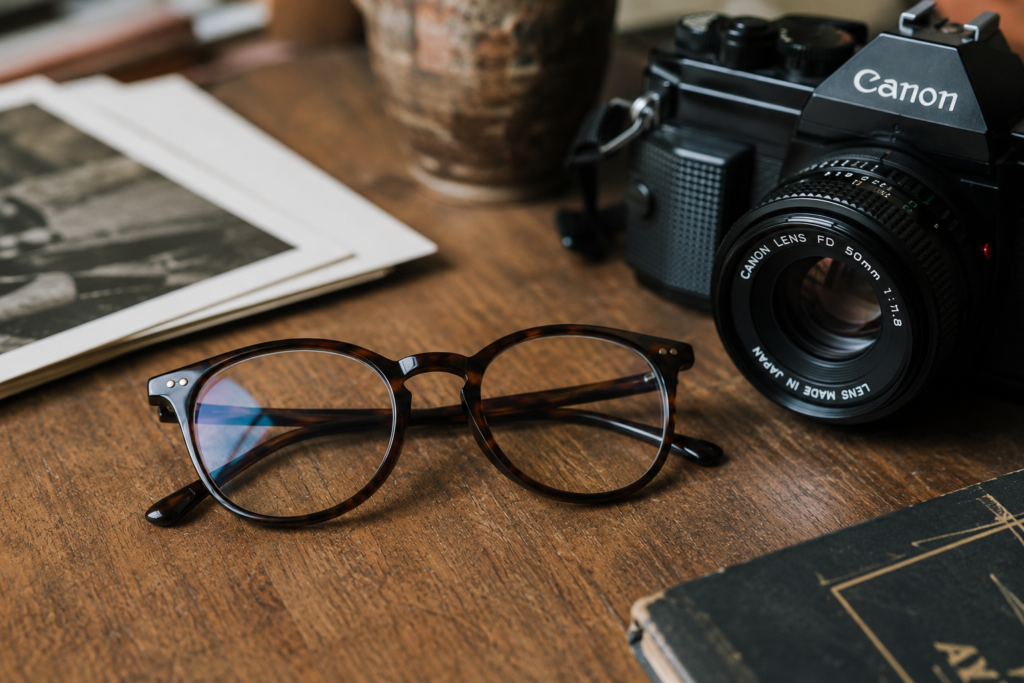
In true rebel algorithm fashion, I somehow came across an advert for Extreme Telephoto Lenses, marketed as “bringing distant worlds within reach.” Apparently, my browsing impulse is completely out of control because, in no time, I knew about gravitational lenses and super-telephoto lenses. Literally. My brain is now carrying around an alarming amount of information about lenses that I will almost certainly never apply during my time on earth. It’s in good company, however, because it sits right next to a lot of information from the 8-4-4 education system that I have never applied. You know, like those tanakali za sauti that I have been looking every which way to apply with absolutely no luck.
I’ll not make this article entirely about those lenses—it’s not like you killed my cat. You are not my enemy, and I wouldn’t hurt you in that way.
That spiral did lead me to think about lenses—not the physical ones, but the psychological ones we wear and quietly peek through every single day without even realising it. We spend our lives crafting them from our experiences, so that by the time the alarm goes off each morning, they’re already sitting on the bridge of our noses. It is these lenses that allow two human beings to have the exact same experience—sometimes standing in the exact same place at the exact same time—and walk away convinced they saw completely different things.
On a boring Thursday, a colleague and I drifted into speaking about hikes. She relayed the story of how she hiked up Mount Kenya. One of the hikers in her group fell terribly ill and passed out. My colleague proceeded to explain her actions.
“I went on my knees to resuscitate her and repeatedly told her that she needed to fight for her life. She needed to see her children again.”
“We didn’t lose her, but we came pretty close, and I, for one, realised how much danger I actually was in.”
I sat there, shaken, wondering why people voluntarily dance with death like that.
As I left the room to get a glass of water, I heard her say,
“I am doing it again in two months.”
Lenses.
We slowly craft the lens we carry with us as we experience life. When we are born, we don’t have one, and as we begin to experience life, we slowly shape it until, by the time we approach middle age, the lens is often thick. The more adaptable amongst us reshape that lens as they go, making sure that experience does not permanently disillusion their view.
You see, the goal is to retain clear perspective, and the world seems incredibly attentive to making sure we don’t.
In my colleague’s case, I would later realise that hiking wasn’t really about mountains. It was her metaphor for beating the odds in life. Just as she came down safe from danger every single time, she was determined to come back from every dangerous hike life threw at her.
A former friend and her former husband argued for sport, it seemed to me. One day at the ArtCaffé in Lavington, they argued as I held my double cappuccino in my hands like a clutch, desperately hoping I wasn’t there. In fact, to them, I may as well not have been. Those two could argue about colours—any mundanity. Not that it helps, but at least this particular argument was intellectually elevated. It was about investments and how much partners needed to disclose about them.
I must say that part of the reason I wanted the ground to swallow me was that I had started it.
In my brilliance, I had told them this story about a man who lived a pretty average life. It’s not a man I know; the story was also told to me. I pictured him as a man who dressed in plain khakis and light blue shirts, with a neat haircut and a gold wedding band—as do all men who want to go unnoticed.
He and his wife had lived in Donholm for the fourteen years they were married before his demise. They were simple, in love and average—or at least that’s what she thought.
There was nothing simple about his money.
It turns out that, seventeen years before that, he had developed an app for a company he worked for. After they let him go, he sued them for intellectual property theft. He won and was awarded twenty-two million shillings, which he invested over the years. By the time he died, his investments were worth one hundred and two million Kenyan shillings. He was in the process of developing his will before he collapsed in an elevator on his way to his very, very average job.
I was fascinated by this story.
I imagined him every morning drinking Kenyan tea with bread or arrowroots, driving his beat-up Toyota Corolla into a magnificently old building on Muindi Mbingu Street, listening to old-school rhumba and adjusting his spectacles, all the while knowing he was a multimillionaire.
I imagined him watching his wife balance three kids in the house while ironing his clothes, counting change to get the most affordable hairstyle, living simply all the while he was sitting on a load of cash, never telling a single soul.
His wife only found out because his lawyer said to her,
“You have to secure these assets before they go unclaimed.”
So, you see, this debate was needed. Perhaps not requiring the venom I saw in my friend’s eyes as she said to her husband,
“It sounds like you would do that to me!”
At that point, I knew it was time to rescue this ship I had released from the dock.
“I think the bigger issue is why he did that. I think when people have been poor before, each coin they make marks the distance between themselves and poverty, and each coin they spend edges them closer to it. So they stay in perpetual fear of spending, afraid that, in no time, they may hear poverty gleefully whispering,
‘Welcome back, old friend.'”
It only worked momentarily. Those two looked at me for all of three microseconds before reverting to their argument. They never even saw me leave.
Some divorces are needed—that one was inevitable.
A clash of two lenses.
In the Khaki Man’s story, he lived through the lens of scarcity long after it was no longer needed. Worse still, and perhaps unknowingly, he forced his wife to live through that same lens, unbeknownst to her.
Practically speaking, we often clash with people because we could be looking at the very same piece of art and see something completely different. Sometimes those differences are complementary; other times, it’s like trying to fit a trapezium into a circle.
I shared this thought process with somebody, and they asked,
“So what is the bottom line?”
“I guess clean your lenses every night before you put them down and sharpen them every morning before you wear them.”
That night, as I climbed into bed, I realised I had answered the question wrong.
It may be near impossible to have complete clarity with our lenses because life evolves far too quickly and is not always gracious enough to leave us time for reflection.
So let me offer what I now believe is a more accurate bottom line.
Empathy.
We will never know the nature of the lenses another human being carries—how thick they are, whether they are cracked, whether they are imbalanced, or how they came to be that way.
All we will always know is that something happened there.